Saturday, May 17, 2014

What's Coming Home with Me?

I can hardly believe that in a month and a half I will be stateside again. This has been an incredible journey that has really only just begun. I’ve learned more about myself and about God than I ever could have expected. I’ve learned and lived in another culture that is so rich and there are so many parts I want to take home and adapt. In big and small ways I’ve already taken on parts of Madagascar that you will for sure notice. Here is a brief look at what some of those might be.

-      English might not always come out of my mouth. I apologize in advance for speaking Malagasy to you. I worked really hard to learn the language and in some situations English escapes me and all that comes to mind is Malagasy. Ask me to teach a few phrases! I’d love to teach you!

-      When I shake your hand or give you something, I may grab my right forearm with my left hand. It is a sign of respect here and so I’ve grown accustom to it.

-      Eka. Three little letters that mean ‘yes’. It sounds cooler than just ‘yes’ so I may continue to use various of ‘eka’ to say ‘yes’.

-      If I have to pass in front of you, I may drop one arm real low and awkwardly duck down while saying “Azafady”, which in this case means excuse me.

-      Along with weird yes…I’ll make different noises for yes and no then you are used to hearing. The sound American’s make for ‘no’ actually means ‘yes’ here. The sound for ‘no’ is just silly and I love it. Wait until you hear it! 

-      I forever more with it rice with a spoon. I’m not sure how I ever ate rice with a fork before!
-      I may be a rice snob. Uncle Ben’s rice has nothing on Madagascar rice.

-      You may think I’ve developed some sort of weird twitch in my lips. Malagasy use their lips to point to things and people. The last week I’ve caught myself doing it too.


These are all pretty silly. I’ve picked up more than these quirks in my time here but some things are just worth waiting to see and experience for yourself. See you soon, friends.

Going in the Same Direction

My first ride on the city bus was not my favorite experience in Madagascar. Thankfully, the Mada-Gar 7 ups were still all together in Ansirabe along with our coordinators and our Malagasy teachers. The bus was packed full and there was hardly any space to move. It was overwhelming to say the least. I remember getting off the bus and saying, “Well, if I never have to do that again that’d be fine by me”! However, ask me today and I’ll tell you that riding the city bus is one of my favorite things to do!

Fianarantsoa is a really big city so riding the bus, although not a must, is preferable for some destinations. Although, I must give myself plenty of time to get to where I’m going. There is a bus stop about a ten-minute walk from my house. Sometimes a bus is there and sometimes I have to wait a little while. That particular bus stop is part of four different routes. Back in September, I was only brave enough to take on one of the routes. Today, I can hop on any of them and confidently navigate where I am going!

When a bus comes, I greet the man collecting the money and get on. Most buses have about five or six rows of two-seater benches on both sides with a tiny aisle between. There is also the best seat on the bus, right next to the driver. Typically, that seat holds two people. When all the seats are filled up, people must stand in the aisle and in the back of the bus. The stop by my house is one of the first, so I almost always have a seat going into to town but going back home, I’m more likely to stand.

There is a cool culture on the bus. If there is a woman who is pregnant or carrying a small child when there are no seats left, men, children, and other women will give up their seat for her. Same thing goes for an elderly person that comes on the bus.  On several occasions, men have even given up their seat for me. I love seeing people respecting and serving other people.

I always seem to make a friend or two on the bus. I sit down and usually greet a few people to make their stares less awkward. Eventually, someone wants to test how far my Malagasy goes and will strike up a conversation. I continue as far as my language skills allow which always gives the people around me great joy. Now I have group of bus friends between the drivers, workers, and other frequent riders!

Monday, March 31, 2014

I'm Blessed


I’m blessed to have bills.

I’m blessed to have student loans because that means I was able to attend a four-year private liberal arts college and pay for it later.

I’m blessed to have medical bills because it means I was able to seek medical attention when I needed it and not when I could afford it.

I’m blessed to have rent to pay because it means I have a place to live.

I’m blessed to have a water bill because I have running water 24 hours a day.

I’m blessed to have an electricity bill because I have lights when it is dark.

I’m blessed to have a gas bill because it means my house can be warm when it is cold and food can be easily prepared daily on a gas stove.

I’m blessed to pay for garbage removal because it means I don’t have to find a place for it and it is no longer in my living space.

I’m blessed to have car troubles because it means I have a car that can break down.

I’m blessed to “barely make ends meet” each month because in the end, the ends still meet and I am blessed more than I recognize.

I am blessed to have bills.

Sunday, March 30, 2014

Amboaloboka- Eat Fresh!


One of the many things I love about Amboaloboka, the school I live and work at, is the fresh food. A good portion of what we eat comes straight from our own backyard. The students are encouraged to practice their gardening skills by having a small garden of their own. We have three plots of land, one for each class, in or around our property. The teachers from Fa Fa Fi, the agriculture department, teach the girls how to start and maintain a garden. The school provides the land, the seeds, the water, and the time for the girls to practice their gardening skills.

Most of the students at Amboaloboka tend a garden because it is a way to earn money. Yes, that’s right, the school buys their produce! The girls pay a monthly fee for their education and the food cost is wrapped up into that fee. When a crop is ready to be harvested, the student lets a teacher know and the school or my household will buy the produce and eat it for dinner! Between the three plots of land there are carrots, green peppers, another type of pepper called sakay be, green onion, ginger, greens, lettuce, cucumbers, squash, tomatoes, green beans, red and white (we’d call them green) grapes, and pumpkins! All of which are delicious! We also have a couple banana, orange, papaya, and avocado trees right outside my house. Those however are first come first serve and go pretty darn quick!

I think this is such a great idea! The students get hands on practice and guidance from their teachers. I’m confident that when girls go back to their community they will be able to start a garden and provide for their families. The students also benefit by being able to make a little money. Some students put the money towards tuition, others save the money to be able to travel home at breaks, or treat themselves to a coke or new clothes. And of course, it is always rewarding to enjoy the fruits of your labor. The girls take great pride in their produce, as they should, because it is delicious.

I am hoping I will have learned enough this year to start a little garden of my own someday. Eating fresh food and with the seasons is something I have really come to appreciate and will miss greatly! I mean, taking fruit right from the tree, what’s better? 

Monday, March 10, 2014

My Shades


I brought two pairs of sunglasses to Madagascar. I brought two because days before leaving Omaha I lost my favorite pair and like the American consumer I was, immediately bought a new pair. As it would be I found the new pair before I left and decided on bringing both.

Hardly anyone wears sunglasses in Fianar. I don’t know how they do it. When I lift my sunglasses to have a conversation with someone I get the absolutely worse case of squinty eyes followed by a fit of sneezing. Yet, somehow most everyone here gets by without them.

A few weeks ago I put my sunglasses on top of my head so I could successfully flag down a bus to pick me up at an “unofficial” stop fully knowing that the bus wasn’t really going to make a complete stop for me. I jumped up and held on, waiting for people to scoot forward so I could actually stand in the bus. (Don’t worry, mom! I do this all the time now and my bus worker friends would never let me fall off! And let’s be real, I’ve already made friends with all the bus people. J ) In the midst of our shuffling my sunglasses fell off my head, out of the bus, and on to the street. I was ready to say my goodbyes to them, there was no way I would hop off the bus to get them but to my surprise, two men on the bus and one man on the street rushed to rescue them. I continuously thanked them and secretly was really happy I didn’t have to part with those quality Wal-Mart sunglasses.

The next day, they broke.

Although my family here mourned my loss, I knew it would be okay because I had brought another pair! Last week, I was on retreat with the other MADA-GAR 7 UPS. We enjoyed God’s marvelous creation and each other at Andringitra National Park. One day we were hiking and out of no where I hear a “pop” and a lens falls from my sunglasses. Now, I was a little bummed but knew ultimately I’d be okay and I could survive without.

So the last few days I’ve gone without sunglasses. My eyes are in a continuous state of squint and between the sun and the changing of the seasons I am constantly sneezing but I realized the barrier those two dark lenses creates. I’m conscience about taking my sunglasses off when I talk to someone but while I’m walking around they were always on, always hiding my eyes. And I never realize how much they hid until I went without. These past days more people than ever have greeted me and I believe it is because they can see my eyes. I assume it makes me more approachable.

However, I decided I needed to replace my shades and so I bought another pair. I went to these two ladies who have quite the selection whom I pass almost everyday. They were happy to help me pick out the perfect pair. Actually, the women selling fruit nearby and the man-selling cell phone chargers wanted to help me too. Although we all had some different taste in style we all settled on a pair. It was a community affair. As I put on my new sunglasses I couldn’t help but think about the lenses, figuratively and literally, I see Fianar through and the lenses I am seen through in return. And though I can’t go everyday without my sunglasses, I try to let them be the only tinted lenses I see and experience Madagascar through.

Written March 6, 2014 

Sunday, January 26, 2014

Salama Marie!


I pack my bag for the day at Sema Fi, raincoat, crafts, dictionaries, some paper and pens, puzzles, bingo cards, and water. I slather sunscreen on my face and feet the only places that still burn while I am in my beautiful and much cooler than the coast, highlands. Calling out to my mom I say, “Handeha hiasa aho”, I’m going to work! I leave the house and make sure to pass the guard’s children playing under the tree to see get the latest news from them which is always tsy misy, not much. Reaching up I undo the latch on the door swinging it open only as far as I need. On the other side I stand on my tiptoes to place the latch back into its locked position. As soon as I am out of their sight I hear the children yell “Bye bye-oooo”. I echo back to them. My first stop is the welder’s house. As I round the corner I listen to see if they have begun working or not. We bid each other good morning as I pass. I make my way through the little tunnel wondering which child I will see first when I am visible again hoping it is one who I have taught my name. Regardless of whom, I am always greeted by many little ones. We exchange a greeting and I continue on. I’ve arrived at the big house. The children jump up and down as they chant “Salama Marie! Salama Marie!” I’m puzzled, as I’ve never told these children my name. I ask the news of the parents who are usually preparing breakfast, washing clothes, or taking care of one of the children. After sometime we end our conversation and I continue down the hill. I’ve almost reached my favorite part of the walk and I can’t help but get excited. However, I don’t want to miss the beauty of the rice fields I pass through so I make sure to slow my pace. As I reach of the top of the hill I see the stand. The fruit stand where I see my Malagasy grandma. When our eyes meet she stands and with a huge smile and slight chuckle she says, “Salama Marie!”. Thus begins the conversation I look forward to every morning.

I met my Malagasy nenibe, grandma in late November. When I came back from retreat in the end of November it was mid-letchi season. I was addicted to this delicious fruit. One day I noticed this new fruit stand along my walk because of the plethora of letchi. I stopped there on my way home and bought a kilo. My nenibe was so impressed with my Malagasy and couldn’t stop telling me! The next day, I walked by and she called out to me. Each afternoon on my way home I would buy more letchi and we would talk even more. Finally, we asked for each other’s names. As usual, Molly is a difficult name for the Malagasy and my name became Marie. Sadly letchi season came to an end and I feared this friendship would end too but it hasn’t. Nenibe has continued her stand and everyday I continue to stop and say hello. But nenibe, wasn’t always my nenibe.

I spent a week in Manakara (along the west coast of Madagascar) after the first of the year with my friends Karis and Maia. One of our priorities was to bring fruit back as voandalana fruit from the road. I bought coconuts, passion fruit, and tiny bananas to bring for my loved ones back in Fianar. The morning after I returned I packed my bag again but this time with fruit. I set out on the walk that I described above and when I reached the stand I greeted nenibe with the tradition handshake and three kisses on the cheek. Then I opened my bag and pulled out a bag of fruit for her. She clapped, smiled, and laughed saying something along the lines of “Malagasy ianao! Efa mahay voandalana” You are Malagasy! You already know about fruit from the road. She then told me that I am her white Malagasy granddaughter and she is my Malagasy grandma. Now every morning, before I head to work I greet my Malagasy nenibe. My nenibe loves me as she has told most of her friends and family in the area about me. Now, even people I have never met greet me with, “Salama Marie!”.

At YAGM orientation back in U.S. we were given a copy of the poem Passover Remembered… by Alla Bozarth-Campbell, the poem is near and dear to many of our hearts. Different lines support different stories of my journey here and I know other YAGMs feel the same way. The line that is close to my heart today is,

“Continue to call each other by the names I’ve given you to help remember who you are.”

At Amboaloboka I am Tantine Molly. At Sema Fi, I am the letter “W” tapped of the heart two times. To my sisters in Madagascar I am letchi. To my actual sister I am Mo. To my best friend and small group at church I am Mo-Mo. To my nenibe and the area surrounding my home I am Marie. These names not only remind me who I am but that I belong and that I am loved enough to be called by name. 

My Sisters, My Best Friends


There are two very important people in my life here in Madagascar that I want to introduce to all of you. I’ve talked about them in passing but they mean so much to me that they deserve a whole blog. As the title suggest, they are my sisters but have also become my best friends. Their names are Hanta and Paulette. “Technically” speaking they aren’t my host sisters, as my host mom, Salina, does not have any biological children of her own. However, Salina has many spiritual children and Paulette and Hanta are two of them.

Paulette is a former student of Amboaloboka and now serves as a practicum teacher and helps keep Salina’s house up to tip top shape complete with delicious meals three times a day seven days a week. Paulette is primarily responsible for our 200 hundred chickens and their eggs. She and Hanta work together selling our eggs all over Fianar. The students, who are learning to take care of the chicken, pigs, and rabbits, learn under the supervision of Paulette. She even helped deliver 24 baby pigs after the first of the year! Paulette’s willingness to serve is incredible. She always has a smile on her face.

Now, a little bit more about our friendship! We began our friendship with my first time washing my clothes. There have been many times Paulette will get tasked with showing me where something is in town and we will spend a good couple of hours walking around together. Although my Malagasy is limited, as is her English, we always find a way to communicate. I love learning new words from Paulette. She will slowly sound the new word out and then continue to use it throughout the week or until I can remember it on my own. We have also found a new way to communicate, laughter. Paulette and I laugh constantly! It has become our unspoken goal to find new ways to make each other laugh everyday. It began with dancing anytime there was music on. Next, it turned into tickling each other. Every meal we eat our Fanafody or medicine of sakay (a perfect combination of spicy chilies, garlic, onion, ginger, vinegar, and salt). At some point we even made our own secret handshake that we do at the end of each meal. Recently, we have started making up our own songs in Malagasy to sing to each other. There are nights where our faces hurt because we have been laughing and smiling so much! Salina calls us Molly Mikilika and Paulette Mikiliki, that comes from the word to tickle, “Mikilikiliky” (me-key-Lee-key-lee-key). Although we have created our own pet names, I call her cookie and she calls me letchi after our respective favorite desserts. The end of each night we call out to each other, “Goodnight, cookie”, “Goodnight, letchi”.

Then there is my wonderful Hanta. Hanta just finished her studies at Amboaloboka last year and now is learning more from Paulette. Every morning Hanata goes to the market to get the food for the day. When she returns she prepares breakfast for us and then for the pigs! Hanta is also very good at sewing and enjoys making new things in her “free” time.

Hanta and I immediately bonded over music. When I finally got the courage to bring the ukulele out she desperately wanted to learn. For a while every night we would sit on the porch while we cooked and I would teach her. Now, she may be better than I am! We love taking turns playing and singing together. About a week ago, I came home from the cyber café singing “It is Well With My Soul” after being serenaded by Jon. Hanta heard me singing and started singing in Malagasy! We spent at least an hour if not more teaching each other the song in our respective languages. We’d sing the whole thing in English, in Malagasy, and then what I found the most beautiful was singing in our respective languages at the same time. This past Sunday we sang, “Blessed Assurance” (in Malagasy) at church. However, I can’t resist singing in English sometimes and neither can Hanta. So together in the midst of over a hundred voices singing in Malagasy our two voices were raised in English. One of the many things I love about Hanta is her eagerness to learn all things English and American. When it is just the two of us we always use this mix of English and Malagasy that I think only we could understand because when we are together we aren’t afraid of making mistakes. We support each other, teach each other, we ask questions and grow in more than just a language.

If you could only see the three of us together! There are times we laugh so hard we literally cry. When mom isn’t looking we take extra dessert. When mom isn’t home we have letchi eating contest! I could probably write a whole book on the silly adventures we have together. We always have a great time. I am so thankful for them and our friendship and the unique ways we have bonded. I love my actual little sister, Emily, very much and most days I love being her older sister but I’ve always wanted an older sister. I am so blessed to have two older sisters here in Madagascar.


 This is what a typical night looks like. Hanta is in the white and Paulette is in the purple.

Saturday, November 16, 2013

Happy Two Months!


Happy two month Anniversary of living in Fianarantsoa to me! It is hard to believe it has been two months since I stepped off the bus in Fianar and was bombarded with sights, sounds, smells, way too many people wanting to carry my bags, and a whole bunch of feelings. I remember tiptoeing around the Amboaloboka compound careful not to offend anyone or do anything I wasn’t supposed to do. Now, although I am still conscious of how my actions are perceived by others I do a lot less tiptoeing around. Hanging out with my students does not overwhelm like it used to. In fact, I often chose to go hang out with them because I love our time together. I am no longer afraid to sit in on another class and learn how to cook, sew, and knit along side my students.  Although I will say, I wish I had spent more time learning from my mom. She is quite crafty and an excellent cook. Learning how to knit in a different language or without any words at all is a challenge and to think I could have learned years ago! Nonetheless, I enjoy the charades and laughs that come with our time spent together.

Hopefully you are hearing what I am trying to say, I love Fianarantsoa. I have learned so much from my time here and I want to share twelve things I have learned with you. There are twelve because the 12th is the day I arrived in Fianar.

1.                    I now can successfully eat just about anything with a spoon, and prefer it. When tasked with eating with a fork, I failed miserably.
2.                    I have learned to love the sound of the roasters crowing at daybreak. It used to put a sour start to my morning and now they are the only alarm I need.
3.                    I have learned the order in which the people gathered around the table served themselves. I have even impressed some of our guest by uncovering the rice and placing the serving spoon pointed at them, signifying that they are welcome to serve themselves first.
4.                    With the help of Karis I have learned how to start a fire in the charcoal stove so I can make popcorn whenever a craving hits.
5.                    I have perfected the art of a bucket bath. You’d be surprised how much less water you use when it isn’t coming streaming out by the gallons.
6.                    I have learned that the rhythm of The Lord’s Prayer and The Apostle’s Creed is the same in Malagasy and English. There is something beautiful about saying them together.
7.                    I can navigate the bus system by myself with confidence. I can even tell the man who collects the money that I need change if he tries to charge me more.
8.                    Malagasy do not like thunderstorms or rain in general. So I have learned that I am deemed crazy for sitting outside on the porch when the rain arrives.
9.                    I have mastered the art of placing 10 stamps on an envelope without covering either of the addresses. Believe me, this is more challenging than you would think.
10.                I can read Malagasy well enough to sing with my students at church better know as the Amboaloboka chorale.
11.                I have learned that you always prepare more food than what you need because you never know when a guest might drop by and you must always serve them something to eat. There is always room for one more here.
12.                Finally, I have learned that I couldn’t have learned any of this without leaving the comfort of my room. Some days are harder to leave my room than others but God always surprises me with what He has planned for that day.

So here’s to two months in Fianar! Thank-you for being part of my journey here, I always enjoy hearing from you. Your support means the world to me!

Friday, October 25, 2013

Nuggets of Information!


I am so grateful to all of you that read my blog! Thank you. It is nice to know that people are reading. Thank you for your questions in emails, facebook messages, and letters. I love to answer them. I apologize, because I’ve noticed a theme…you all want to know what my daily life is like and I haven’t told you! Mainly because I don’t have a “typical” day yet, even so, I’ll try to flush out the details I do have for you!

I live at Sekoly Baiboly Amboaloboka in Fianaranstoa. The words look more difficult to pronounce than they actually are, I promise. Maybe I’ll make a youtube video pronouncing them. Sekoly (school) Baiboly (Bible) Amboaloboka is a Bible school for young women ages 16-30. Although, I’m pretty sure this year our oldest student is 24. There are about fifty young women who live here from October- June. There are two tracks here you can take, the fist is a 9-month program. These students focus solely on taking care of rabbits, chickens, pigs, and bees, gardening, cook, and this year learning English from me. The second track is an 18-month program. These students learn to cook, sew by hand and with a sewing machine, knit, crochet, as well as taking care of the animals and gardening. They also take courses on Martin Luther, ethics, theology, psychology, counseling, and again English from me. They are certainly busy!

I teach here on Monday, Tuesday, and Friday afternoons. Teaching English in a language you don’t know very well has its challenges but somehow the students are learning! Two of the best things I have taught are, “You are beautiful” and what a hug is. Now every morning after devotion I am greeted with, “Hello, Tatie (Aunt) Molly. You are beautiful. ” and a hug. I’m sure it is no surprise to anyone, but I love these young ladies. They have quickly become little sisters to me. After I finish class students rush to my side to help me put away my things, then one carries my bag, another my water bottle. I have no idea how it happens but I instantly have at least 6 of them hanging on to me ready to walk me to my house so I can put away my things and come back out to hang out with them. I love it.

Next, there is Sema Fi, the deaf school. I have about a 45-minute walk to the school. It has an absolutely breath taking view as it sits up really high. There are again, about 50 students who live at the school from October-June. These students range from about 5 years old to 18 or maybe a little older. They have 4 teachers and I think 2 maybe more young adults that live with the students and help take care of them. The students are very eager to sign with me so I am quickly trying to learn enough to be able to understand and sign with them. Right now, I am going there on Wednesdays and Thursdays.

Finally, SALT, the seminary. My role here has yet to take shape but I will most likely be teaching the wives English and leading a conversation club with the Pastors. Most of the Pastors have already learned English and just need help with pronunciation and understanding within the context of a conversation. SALT, like Sema Fi is about a 45-minute walk.

Hopefully this answers a few more questions you have. If not, ask away and I will do my best to answer them. Thank you again for reading. I really do appreciate the support, love, and prayers for you all back home! 

Sanctuary


I was blessed to be able to spend the month of May in Tanizania, Africa in 2010. I’d say it was the best experience of my life but I’ve had some here equally amazing. I was a picky eater back then. Okay, I’m still pretty picky but I have broadened my horizons! In Tanzania we would travel to small villages in the bush, worship with them and share a meal together. The meal almost always consisted of goat. Before the meal we would have “tea” made from warm goat milk, and bread. I wasn’t too fond of this cuisine. Luckily, I had wonderful friends who would drink my goat milk and eat my goat and bread so I didn’t have to. Thank you Jess, Nicole, Jen, and Britney! However, one meal I sat next to our professor who wasn’t going to let me get away with passing my food off. He sat next to me and told me to find my sanctuary. I looked at him puzzled. My sanctuary is on a different continent! It will take me a couple plane rides to find my sanctuary at Wartburg or back in Papillion! He explained he wasn’t referring to a physical place but more of a state of mind. The first Webster definition of sanctuary is, “a place of refuge or safety”. Sure, this could be a physical place but it can also be a state of mind. He continued to encourage me to find my sanctuary within my mind. Somewhere I felt safe. With each bite he reminded me of my sanctuary. It happened all too slowly but eventually, I finished my whole piece of mysterious goat meat. To this day, I vividly remember this exchange and use to conquer other uncomfortable situations or just in my daily life.

Typically, my sanctuary, my safe places are gazebos. I have no idea why I am drawn to gazebos but I am. One day I hope to have a gazebo of my own. LOVASOA, the Norwegian compound we had our three-week orientation at had a gazebo. Every morning that is where I could be found. I went to the gazebo to take refuge, not that I was in any physical danger, but moving to a new country is a challenge and my gazebo felt safe. As our three-weeks came to a close I was sad. Not only was I leaving the comfort of my friends but also the safety of my gazebo. Moving to Amboaloboka along with many other transitions meant finding a new sanctuary. Anna & Ian, two YAGM volunteers, stayed with me the first night before heading out to their own placements. As the three of us walked around the compound Anna spotted this little gazebo type area and said it could be my gazebo. It is filled with numerous plants that are just now starting to bloom. It is beautiful but after I tried it out, it just wasn’t fit to be my gazebo, my sanctuary.

I am pleased to tell you that I have found my sanctuary and it was in the most unlikely place. There is a small covered porch off of the kitchen. It actually, for all extensive purposes, is the kitchen. There are three charcoal stoves on this porch where all of our meals are prepared. At first, this porch intimated me. There were a lot more young women living in the house, six to be exact, compared to the two now (not including me or Salina). All six young women gathered on the porch to help cook. I’d try to come and help but with my limited Malagasy it was a challenge so I’d leave. Eventually, I started to stay and we would play a little game of charades to teach each other new words. As the weeks went on our numbers dwindled. Irena & Janelle, my host cousins, went back to their home in the south of Madagascar. Eliane, another host cousin, went back to work at the blind school several hours away. And Rova, moved into the school building to be with her classmates. Now, our porch has three attendees, Hanta, Paulette, and myself. Every night I bring the ukulele out to the porch and Hanta and I take turns playing. Hanta, who is learning English and ukulele, has successfully memorized the music and words to, Father I Adore You, I Exalt Thee, and ironically, Sanctuary. We take turns playing and who ever isn’t playing watches the meal cooking on the stove. This porch, this time together, has become my sanctuary. All of my previous sanctuaries have been different because they have been just for me. This one is special because I have let two other people in but it still feels just as safe.

My porch sanctuary has served another purpose; it is a time and place of worship. One of the things I miss most is standing next to my best friend, Jenn, every Sunday singing our hearts out with praise and adoration for Our God. I knew this would be something I’d miss because the last few times we worshiped together I couldn’t get through a single song without tears streaming down my face. I’ve struggled not having this time together with Jenn and I will continue to miss it but now I have something different. I sit on the porch and sing my favorite songs while Hanta and Paulette cook and listen. I get so into it that sometimes I don’t realize students have come around the front of the house to listen. What I really love is some of the songs I have sang so much the women add harmonies. I look forward to this time every night. It is a beautiful time of worship, and someplace safe, my porch sanctuary in Madagascar. 

Saturday, October 5, 2013

Learning By Watching


I’ve been doing a great deal of watching while I have been in Madagascar. When you cannot always understand what is being said and you do not have enough language to ask what to do, you watch. I have learned the order the women I share a table with serve themselves by watching. I have learned the precise way to scoop rice onto a plate, smoosh it down, and place the appropriate amount of laoka (side) on top. I watch each greeting so I know when a handshake is appropriate and when kisses on each check should be used. While walking on an uneven path I stare at the person’s feet in front of me so I know exactly where to step. Almost everything I do, I watch someone else first. However, I am fortunate enough to be living alongside amazing women who not only want me to watch them but also want to teach me and then watch me do it!

If you are part of the Thanksgiving! Lutheran Church (T!LC) community in Bellevue, Nebraska, you may be thinking this sounds similar to the “D Square”. I was thinking the same thing! The “D Square” is short for discipleship square. T!LC adopted this from 3D Ministries (www.weare3dm.com). Each side of the square represents a stage of discipleship. The sides are as follows, I do, you watch; I do, you help; you do, I help; you do, I watch. The “I” refers to the person teaching and the “you” to the person learning. If you look at how Jesus taught His displaces you will see this progression. What’s really cool is that the young women here without realizing it have successfully taken me through the square.

As I’ve said, I’ve spent a lot of time watching while I have been here. A good portion of that watching time is spent on the porch of my house, where all the cooking happens. We have a small oven and a gas stove in the kitchen but the students must cook on a charcoal stove so in solidarity, we prepare our meals on the charcoal stove on the porch. Elliana, Paulette, Hanta, and Rova work like a well oiled machine to prepare a delicious meal. I always try and ask, “afaka manampy?” can I help but they always reply with a smile and a no.

Salina told me that we had an excess of sweet potatoes so the young women were going to make a cake. A cake out of sweet potatoes? I am intrigued. I asked Salina to let me know when they would begin to prepare it because I wanted to watch. I heard a soft knock on my door and it was Rova inviting me to watch. So like usual, I stood in the kitchen and watched the women work with such precision. Two of the girls beat eggs and sugar together until it was completely smooth while the other two peeled and mashed the sweet potatoes. It came time to add the sweet potatoes to the mix and I heard one of the women say something to me I didn’t understand but I picked up one word “manampy”. Help, manampy means help! I put it all together when I was handed the whisk. I was so happy to be asked to help prepare this cake! Paulette began spooning in the sweet potato as I cautiously whisked it all together. Occasionally, she would spin the bowl or take the whisk from me and smooth out a clump. Next, came the flour. Paulette added the flour to both my bowl and Rova’s bowl who was also making this cake for the first time. It became a competition to see who could mix in all the flour first. I mixed, and mixed, and mixed as Paulette watched me and cheered me on with “tsara be!”, very good! I’m pretty sure Rova let me win but all the women continuously called me the winner, as I had taught them the words winner and loser earlier this week. We poured the batter into two cake pans a placed them into a large pot that sat on a charcoal stove. What’s really cool is you put the lid on upside down and add charcoal to the top of the pot too. It sits like that for an hour or so before it is “vita” finished. In the meantime we finished cooking dinner all while singing, laughing, dancing and teaching each other new words. I have come to love the time we spend on the porch together. The next morning we enjoyed our sweet potato cake for breakfast. The women made sure to tell Salina which cake was mine and everyone praised me for how it turned out. I couldn’t help but smile although knowing I wouldn’t have been successful had I not had their help.

I wish I could say I have processed through the D square and picked up on everything as quickly as I did with the sweet potato cake, but I haven’t. It is a process that takes time. However, I am so blessed to have women who are patient with me and show and tell me over and over again until I understand. Even when I forget the next day they smile and repeat the process. That is the beauty of living in a community of believers. Each day they forgive me for forgetting yet again, give me the grace I don’t deserve and lovingly and persistently teach me again. 

Friday, September 20, 2013

He'll Wash Your Sins, Not Your Laundry


Today, I learned how to wash my clothes by hand! We learned once during orientation but I didn’t feel like I had a good grasp on it. At first, Salina said that the young women could wash my clothes but I insisted that I help and learn. You would think that such a mundane task would be easy but there is a lot of work that goes into it!
            First, you make some soapy water and put your clothes in the water. Next, you take a bar of soap and one garment. You rub the soap all over the garment and then rub the garment together against your hands. When you do it right it looks cool and makes an even cooler sound. I have yet to master it. After you think the garment has been scrubbed enough you wring it out and put it in a bucket of clean water. You continue this until all your clothes are in the second bucket. Now, you don’t use soap but you still rub the garment together and wring it out and place it in clean water. You continue this until the water is clean and the garments are no longer soapy. This part of the process can take a while. Today we rinsed and wrung out my clothes 4 times before they were finished. Of course, you can assume the next task is hanging everything out to dry. Reading this it sounds really easy but I promise you it is more work than you think!
While I was washing my clothes I began to think about sin. Yes, my sins are forgiven because Jesus already paid that price but it still takes some work for me to repent. My sins are my dirty clothes. The clothes are covered in dirt, shame, ugliness, hate…the list could go on. God meets me where I am with the soap of Jesus to scrub my clothes clean. Now, the dirt is washed away. The sin is cleansed and I am forgiven. However, in order for me to repent and change the way I act and believe there is so much more that needs to happen. That’s how I see each rinse cycle. Each rinse may be a scripture that pertains to the sin, a devotion, a sermon, a conversation with another believer, or a kairos moment from God.  These things make up the water, the water of life, and each time the garment is wrung out is a piece of the notion to sin leaving. Whatever the rinse cycle may be is helping me change and grow and hopefully do better next time. The clothes are hung out to dry, worn again, and eventually they become dirty and full of sin again. The cleansing process is repeated.
It is a continuous cycle. My clothes will always get dirty and I will always sin.  However, I’m always forgiven by the love of Jesus and the grace of God. I believe if I am spending time in the living water through scripture, prayer, devotions, sermons, and other believers I can make a difference. I will never break the cycle of sin but if I’m trying to live like Jesus lived, I’m happy. Jesus washed away my sins. Jesus washed away our sins. If only he would wash my laundry too. J

Arm in Arm


Over the last month in Madagascar I have learned many things. One of them is that I walk too fast for the Malagasy culture. I’ve always known I am a fast walker but here I am extremely fast.  I want to share with you two beautiful ways I have been reminded to slow my pace.
            During orientation on September 5th we were given the task to go on a “culture capture”. Austin and Tanya didn’t give us many parameters other than we had to be outside of the compound we have been living at for 1 hour and bring something back with us. The something could be a thought, an idea, or even something tangible. I set out having no idea what I was going to do or where I was going to go. I began to pray asking God to guide me and show me what he wanted to me to see. While I was praying I was quickly walking through the streets. Eventually, I ran into a group of students on what appeared to be a field trip. As you can imagine, they were walking pretty slow which slowed me down as well. I realized how quickly I was walking and decided to make a conscience effort to walk slower. I continued walking at my slower pace into a residential area. A pousse-pousse driver had been following me for a while now offering me a ride. I had politely declined several times but he was becoming quite vocal and rude. Two women who had been walking in front of me heard the driver and turned around to help me. After quite the exchange the pousse-pousse driver left and the women and I began talking. I stumbled through what little of a conversation I knew I could have and then we stared awkwardly at each other.  Then the most wonderful thing happened, each of the women took one of my arms and we began walking together.
            On Saturday the 14th, Rova, Hanta, Paulette, and I went out for a walk and to get some things at the market. Again, God gave me the kairos to slow down so that I could walk with these young women. I struggled to walk beside them instead of a couple steps in front of them but I did the best I could. We walked through the city and of course everyone stared at me. Rova must have sensed that I was uncomfortable because she came next to me and grabbed my armed. We continued the rest of the walk this way, arm in arm. Not only did this make me feel like I was part of the community but it helped the community see me as part of it too.
            These are two beautiful reminders that I have to walk, both literally and figuratively, with the Malagasy people this year. If I try to walk too quickly and do it on my own I wont get anywhere. However, if I walk arm in arm with my community and God who knows what is possible! So I am going to surrender my need to walk quickly and instead take the pace of those I am walking with, walking arm in arm. 

Around The Table


             I hesitate to sound like the old Nickelodeon campaign (Was it gather round the table?)…but something special happens around the table.
             Over the last week I have come to appreciate the time spent around the table. Of course it is great because I am getting nourishment and everyone loves food but there is more to it.  Before I get to the table it is always a mystery how many people I will be sharing a meal with. Then I get to the table and see how many places are set and begin to wonder who will fill those seats. After some time everyone gathers round and we pause to say a prayer of thanksgiving. Most of the time the prayer is in Malagasy and I can only pick out a few words but sometimes one of the young women will say a prayer in English. The meal always starts out quiet with awkward glances and smiles across the table but by the end we are laughing and having a good time. This has also been a great place for me to learn Malagasy and teach English in exchange. Cultural barriers are broken around the table. I feel as if we come to the table as strangers and leave as friends. I look forward to every meal knowing that I will get my fill of not only food but conversations too. This is not only true for meals at my house but for meals at Soatanana too.
            In Soatanana we had no table to gather around but sat on the ground in a circle. As always, someone would begin with a prayer. The young women from Amboaloboka would then dish each of us a plate. At first I thought it was a coincidence but later I realized that each meal the women would make a plate special for me. Graciously, they gave me a smaller portion than everyone else so I would have no problem cleaning my plate. Just like that the meal would begin and conversations would slowly follow after. The first few meals were uncomfortable for me. The conversations were all in Malagasy and happening way to fast for me to understand. So I sat quietly and ate.  After a few meals, my new friend, Nirina, exposed that she knew English and we began to talk. Eventually everyone began to take part in this conversation that consisted of broken English and Malagasy.  The time we spent together in meals made me feel like part of the community. Again, we came to the table as strangers and left as friends.
            When we come to break bread together we are in community. I can’t fully explain what happens but I am so glad it does. Like I said, there is something special that happens around the table. 

Coming Home


          The past few days I have had quite the cultural immersion. On Sunday the 15th, Salina (my host mom), Janette (a young woman who works at Amboaloboka), the wife of the guard at Amboaloboka, and another young woman who is friends with the other women set out to go to church to catch a bus to Soatanana. We went to Soatanana for a conference and a ceremony for men and women who completed their two-year sheparding training.
            When we arrived at the church there was one bus and tons of people. I quietly began to stress out in my mind because the number of people who needed a ride and the number of seats in that bus did not match up. Thankfully another bus and a truck appeared! We loaded all of our things onto the top of the bus and set out for Soatanana.
            From what I can tell, Soatanana is a very small countryside town. The town sits nestled in between mountains, which provides for an excellent view. All the members of my church stayed in one house. We were given two rooms to sleep and eat in. The room I stayed in was of decent size but we had about twenty people staying together. It definitely made for close quarters. We also shared a small concrete room to “do our business” and shower in. I was thankful for a place to sleep and eat but I wasn’t looking forward to staying there for three nights.
            The conference was held outside in an open area. There was a stage set up with chairs and a nice covering to provide those shade who sat under it. Everyone else was expected to sit on the ground, a brick, or something they brought to sit on. The mornings were always brisk but by the afternoon it was quite hot. I do not know how the people bared to sit in the sun for hours but they did. I was one of the fortunate who was invited to sit on stage. It doesn’t sit well with me that I was invited on stage because I am a foreigner but I don’t have enough language yet to communicate my feelings. The upside to sitting on the stage was meeting Pastor Dennis from Tana. He whole heartily welcomed Karis (another YAGM who is also in Finaranstoa and joined me in Soatanana for a day) and I to Soatanana and because his English was so good he translated much of the service on Tuesday. He let us ask endless questions, encouraged us to take pictures, and was a nice friendly face to see throughout the conference.
            Even with the translations from Pastor Dennis and Salina it was hard to fully comprehend what was going on.  From what I did understand, it was hours and hours of church. Most days were filled with five to eight hours of church. I found lots of time to read my Bible, pray, let my mind wander, journal, and write letters to all of you lovely people back home. As frustrating as it is not to know what is going on, it is nice to be able to take for me in the midst of it all.
After another long worship service, packing the bus, and sharing a meal with at least 200 Malagasy people we left Soatanana. I was tired, smelly, and hungry when we arrived back at Amboaloboka. I just wanted to go shower, skip dinner, and go to bed. However as the headlights from the taxi hit the house the door flung open and all the young women came running to greet us. Excitedly they opened the car door and helped me out. Each woman greeted me with, “Tongasoa”, welcome, a hand shake that is almost good as a hug, and kisses on each cheek. (Emily, this is nothing like we do. Haha J) The welcome I received was just what I needed to forget about my awful mood. After four days of feeling out of place it felt so great to be back to somewhere familiar. After a much needed shower we shared a meal together. The young women must have noticed that my favorite laoka (side) is potatoes with eggs because that is what had. We prayed, ate, laughed, talked, and taught each other new words but the best of all is that we were together again. For the first time here I felt at home. Together at home. 

Monday, August 26, 2013

Giggles & Smiles


I cannot even begin to express to you the sights, the sounds, the smells, or the people of Madagascar using words alone.  Not even a picture would capture everything I have seen and heard. You might be asking, why are you even writing if you can’t put into words or a picture what you are experiencing?  It’s because the most impactful moment I have experienced you can experience too.

On Sunday, our first morning in Antsirabe, I found a gazebo (I love gazebos!)  overlooking a small part of the city to sit in and just spend some quiet time. It was pretty early but the town was already beginning to bustle preparing for Church. I began to listen to what was happening around me. Over top of the birds, cars, music, and conversations I heard children singing, playing, and laughing. I couldn’t see these children but their sounds brought me such joy. I could not help myself from smiling.

On several occasions, we have ventured outside of the Norwegian compound we call home for the next three weeks. The moment we step outside of the gate of our comfortable home we become, vaza. Foreigner. Everyone seems to stop and look at us. You can feel the conversations begin to rise among the Malagasy people. The children sometimes call out, vaza, vaza! And then, more often times than not they smile and giggle. As uncomfortable as all the attention might be I look at the children and smile back at them. Their reactions to my smile vary and sometimes make me laugh too. So then, without any words, we laugh and smile together. A smile doesn’t disappear within seconds so as I continue down the street I make eye contact with a shopkeeper or someone passing by and smile. Do you know what happens? Despite all our differences, the lack of language, and the uncomfortable feeling I’m sure we both have…they smile too.

The pure joy a smile and laughter can bring is powerful. I already know that I am going to continually use a smile and laughter throughout my whole year. So smile, wherever you may find yourself. It is universal and crosses all cultural barriers. Besides, who doesn’t love to smile? :)    

Thursday, July 25, 2013

I Will Go, Lord Send Me

During staff meeting on Tuesday I was asked if I finally knew where I would be living and what I would be doing in Madagascar. Again, like many times before this moment my answer was, "no". I promised soon as those around me were growing just as impatient as I was for my placement. We continued with our staff huddle (it is basically a small group Bible study) about listening to God's voice and what gets in our way to do that. I can't remember the context that the story of God calling Abram out of his homeland came up but it did and it was my kairos moment for the day! Here is where I am referencing, 

Genesis 12:1-4 
The Lord has said to Abram, "Go from your county, your people and your father's household to the land I will show you. I will make you into a great nation, and I will bless you; I will make your name great, and you will be a blessing. I will bless those who bless you and whoever curses you I will curse; and all peoples on earth will be blessed through you." So Abram went, as the Lord had told him...

God told Abram to leave his country, his people, his father's house and God would show him new land. Think about that. God asked Abram to leave everything he knew to go to where? A land God would show him. Abram didn't even get to know where he was going! Yet, in verse 4 it says, "So Abram went, as the Lord had told him." Abram followed God's command, packed up his family, and started moving. That is such an incredible act of faith and obedience. Abram didn't know where he was going, what amenities would be provided, where he and his family would make a new home but without any hesitation he listened to God's call. Abram had confidence in God. What I want to know is where did the confidence come from? The Bible doesn't tell us that Abram and his family were followers of God. There is nothing that supports they knew and worshipped the true God. That being said, wow! Abram barely had a relationship with God yet he still listened to His call, all that he is promised by God and goes as he is told. Incredible.  

After processing through all of that I felt convicted. I so desperately want to know exactly where God is calling me to be in Madagascar. I want to know all the details of what I will be doing and where I will be staying. I never paused to think that maybe I should just trust God and not have such a desire to know all the details. I know I have been called to go but it is if I am saying, "I'll go Lord...but I need a detailed itinerary before I will actually move my feet". I yearn for the same confidence in God that Abram had to just be obedient and do what God asked without any hesitation. 

Right when I became comfortable and at peace with trusting God and following where he led, the long awaited email came with my placement! It is as if God was waiting for me to fully trust him before he would reveal his plan. God's perfect timing is great. 

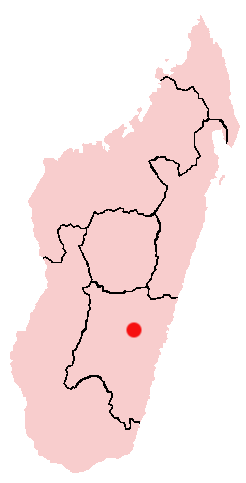
I will be serving in Fianarantsoa, Madagascar. 


Fianarantsoa means "place of good learning". Fianarantsoa is the 4th largest city in Madagascar! Honestly, I am still in the research phase so I do not know a whole lot about the city but I will continue to learn more each day. Feel free to do your own research too! 


File:MG-Fianarantsoa.pngMy responsibilities while I am in Fianarantsoa will take shape when I arrive but I have a general idea of where I will be working. I will be teaching English, working with SALT Seminary, a school for deaf children, and a women's center for young Malagasy women. I will be living with a family at the women's center. 

I cannot even begin to contain my excitement for all of this! Thank you for taking this journey with me.  I couldn't do this without your prayers, love and support! 

In 2011, I worked at Rainbow Trail Lutheran Camp with a great friend, Laza, who is from Madagascar. I shared with him that I will be living in Fianarantsoa and found out that this is where he grew up! Although he no longer lives there, his sister does, and he plans to visit while I am there! I am looking forward to seeing him again! As we were talking this morning he reminded me that I had promised to at some point to come to Madagascar and visit. I must admit, it was a bit of an empty promise at the time. However, I'd venture to guess God smiled when I said that knowing two years later the promise would be fulfilled. God is Good!